焊接车间装了除尘设备,烟还是呛人,这是很多工厂遇到的尴尬。设备风量标得够大,滤芯也是新换的,但焊工操作的位置烟尘照样弥漫。排查下来,问题往往不在设备本身,在吸气罩离电弧太远。
The welding workshop is equipped with dust removal equipment, but the smoke is still choking, which is an embarrassment encountered by many factories. The air volume of the equipment is marked high enough, and the filter element is also newly replaced, but the position where the welder operates is still filled with smoke and dust. After investigation, the problem often lies not in the equipment itself, but in the fact that the suction hood is too far away from the arc.
焊烟除尘的核心不是"抽",是"捕"。
The core of welding smoke dust removal is not "smoking", but "capturing".
焊接烟尘从电弧处产生后,会随着热气流上升,同时向四周扩散。如果在烟尘扩散之前没有把它捕获住,后面再大的风量也只能抽到稀释后的空气,烟尘早就飘到车间里了。行业里有个基本要求:吸气罩要尽可能靠近电弧,理想距离在15到30厘米之间。超过这个距离,捕集效率断崖式下降。很多车间为了不影响焊工操作,把吸气臂拉得老远,结果就是设备白开。
After welding fumes are generated from the arc, they will rise with the hot air flow and spread outwards. If the smoke and dust were not captured before they spread, even the largest amount of air afterwards could only draw diluted air, and the smoke and dust would have drifted into the workshop long ago. There is a basic requirement in the industry: the suction hood should be as close to the arc as possible, with an ideal distance between 15 and 30 centimeters. Beyond this distance, the capture efficiency drops sharply. Many workshops pull the suction arm far away in order to avoid affecting the welding operation, resulting in the equipment turning off in vain.
控制风速比总风量更重要。
Controlling wind speed is more important than total air volume.
选焊烟除尘设备时,采购方习惯看"风量多少立方米每小时",但真正决定捕集效果的是罩口的控制风速。相关标准要求,焊接烟尘捕集的控制风速应不低于0.5m/s,实际工程中通常取1.0-1.2m/s来保证效果。这个风速是在罩口位置测量的,不是管道里的风速。罩口面积越大,需要的风量越大才能达到同样的控制风速。所以设计时要先确定罩口尺寸和所需控制风速,再倒推风量,而不是反过来。
When selecting welding smoke and dust removal equipment, the purchaser is accustomed to looking at the "air volume in cubic meters per hour", but the real determinant of the capture effect is the controlled air speed at the hood. According to relevant standards, the controlled wind speed for capturing welding fumes should not be less than 0.5m/s. In practical engineering, 1.0-1.2m/s is usually taken to ensure effectiveness. This wind speed was measured at the hood position, not the wind speed inside the pipeline. The larger the hood area, the greater the required air volume to achieve the same control wind speed. So when designing, it is necessary to first determine the size of the hood and the required controlled wind speed, and then reverse the airflow, rather than the other way around.
机器人焊接和手工焊接,捕集方式完全不同。
Robot welding and manual welding have completely different capture methods.
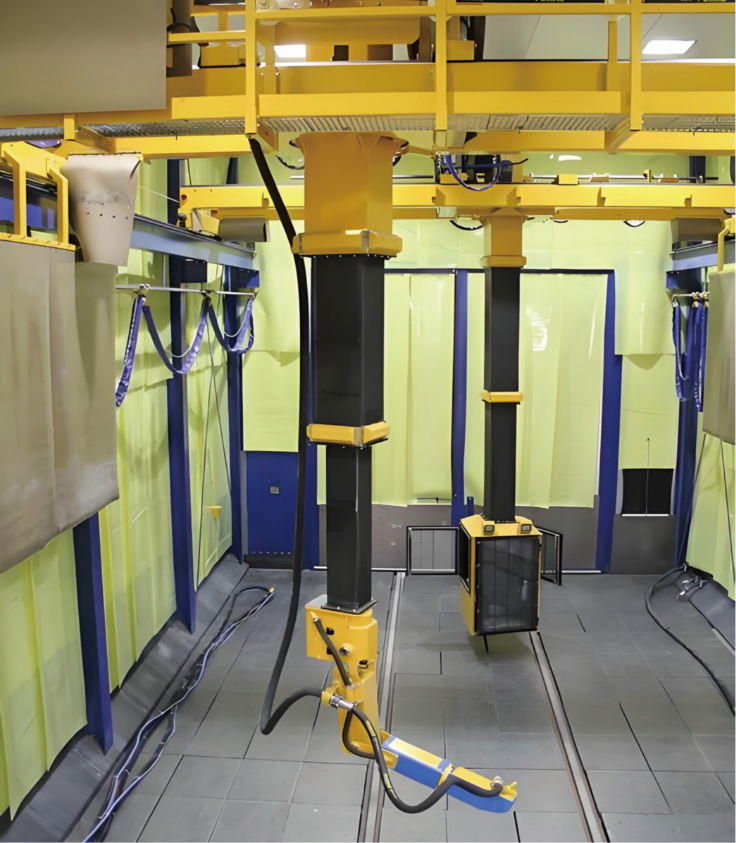
机器人焊接的轨迹固定,可以用整体封闭或顶吸罩把焊接区域罩起来,捕集效率高。手工焊接的焊枪位置随时变化,只能靠可灵活定位的吸气臂跟着走。有的车间把机器人焊接的固定罩方案套用到手工焊接工位,结果焊工稍微换个位置,烟就吸不到了。
The trajectory of robot welding is fixed, and the welding area can be covered with a whole enclosure or top suction cover, with high capture efficiency. The position of the welding gun for manual welding can change at any time, and can only be followed by a flexible positioning suction arm. Some workshops have applied the fixed cover scheme of robot welding to manual welding stations, but as a result, if the welder changes positions slightly, the smoke cannot be inhaled.
滤材选不对,风量再大也白搭。
Choosing the wrong filter material is useless no matter how high the air volume is.
焊接烟尘的颗粒非常细,大部分在亚微米级别。普通滤材拦不住,需要用PTFE覆膜滤筒,对0.3μm以上颗粒的过滤效率可达99%以上。焊接烟尘中还常夹带油雾,普通滤材遇到油雾会板结失效,需要选防油防水的滤材。滤筒积灰后阻力上升,风机会偏离工作点,实际抽风量下降。设计风量时要在理论值基础上加10%的漏风系数,再加10%-20%的滤芯积灰余量。
The particles of welding fumes are very fine, mostly at the sub micron level. Ordinary filter materials cannot stop it, and PTFE coated filter cartridges are needed to achieve a filtration efficiency of over 99% for particles larger than 0.3 μ m. Welding fumes often carry oil mist, and ordinary filter materials will harden and fail when exposed to oil mist. Therefore, it is necessary to choose filter materials that are resistant to oil and water. After the filter cartridge accumulates dust, the resistance increases, causing the fan to deviate from the working point and the actual exhaust volume to decrease. When designing the air volume, a 10% air leakage coefficient should be added to the theoretical value, followed by a 10% -20% filter cartridge dust accumulation margin.
多工位车间,集中式比单机更划算。
Multi station workshop, centralized is more cost-effective than single machine.
工位少、位置分散的,移动式单机够用,随用随拉。工位超过5个、焊接点位相对固定,集中式系统更划算——各工位设吸气臂或集气罩,管道汇入中央除尘主机,一套系统覆盖多个工位。集中式系统的设计难点在管道平衡:各支管的阻力要计算准确,否则远端工位抽力不够,近端工位抽力过剩。
For those with few workstations and scattered locations, a mobile single machine is sufficient and can be used and pulled as needed. If there are more than 5 workstations and the welding points are relatively fixed, a centralized system is more cost-effective - each workstation is equipped with a suction arm or a gas collection hood, and the pipeline is connected to the central dust removal host. One system covers multiple workstations. The design difficulty of centralized systems lies in pipeline balance: the resistance of each branch pipe needs to be accurately calculated, otherwise the suction force at the remote station is insufficient and the suction force at the near station is excessive.
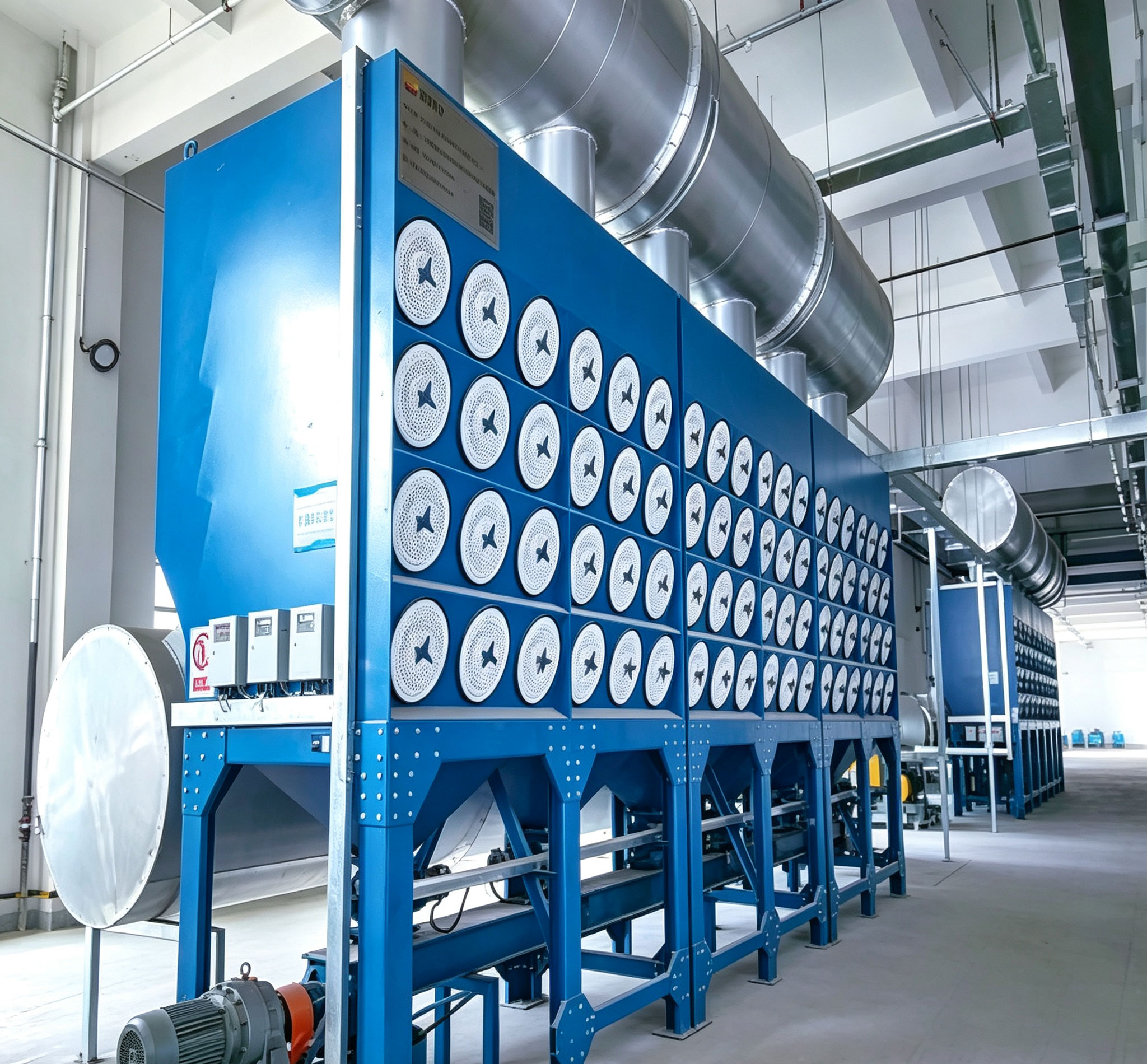
焊烟除尘的选型逻辑很清晰:吸气罩靠近电弧,距离控制在15-30厘米;控制风速达到1.0m/s以上;手工焊接用可调吸气臂,机器人焊接用固定罩;滤材选PTFE覆膜防油型;多工位考虑集中式系统。设备是工具,罩口位置才是效果的关键。
The selection logic for welding smoke and dust removal is very clear: the suction hood is close to the arc and the distance is controlled at 15-30 centimeters; Control the wind speed to above 1.0m/s; Adjustable suction arm for manual welding, fixed cover for robot welding; Choose PTFE coated oil proof filter material; Consider a centralized system for multiple workstations. Equipment is a tool, and the position of the cover is the key to its effectiveness.

 : 18563723072
 : sdcjtz@126.com
 : 山东省德州市齐河县经济开发区名嘉西路9号

扫码添加微信了解更多

 公司简介
公司简介 荣誉资质
荣誉资质 合作伙伴
合作伙伴 发展历程
发展历程 公司优势
公司优势 企业环境
企业环境
 服务办事处
服务办事处 创杰动态
创杰动态 行业动态
行业动态
 鲁公网安备 37142502000144号